Pasquet Cognac

Pasquet Cognac

Visit Pasquet: Chez Ferchaud ,16120 Eraville ,+33 (0)5 45 97 07 49

Products

Active filters

Showing 1-8 of 8 item(s)

Visit the website of Pasquet Cognac

The Pasquet vines at Chez Ferchaud, Eraville
The stone archway at Chez Ferchaud, Cognac Pasquet
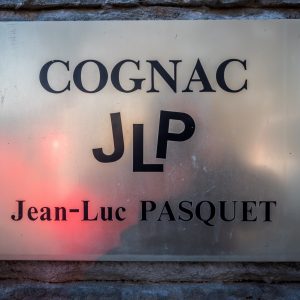
The stone archway and iron gate at Chez Ferchaud, carrying the Cognac JLP sign Photo: Olivier Baudin

Pasquet, organic Cognac growers at Éraville

A Grande Champagne estate, organic since 1998, and a selector of grower Cognacs

Cognac Pasquet works from Chez Ferchaud at Éraville, in Grande Champagne. The Domaine farms roughly 15 hectares of vines across Grande Champagne and Petite Champagne, the Petite Champagne parcels lying at nearby Birac. Jean-Luc Pasquet took the estate on in 1970 and created the Cognac Jean-Luc Pasquet brand in 1977. His son Jean has run the cellar since 2011, and Amy Pasquet joined full time in 2017.

The Pasquet vineyard has been certified Agriculture Biologique since 1998, which makes the Domaine one of the very early adopters of organic viticulture in Cognac. The house works in two ways: it grows, distils and ages its own organic eaux-de-vie, and it selects casks from other grower-distillers it admires. Those selected Cognacs are not necessarily organic, and Pasquet names the families they came from rather than letting them disappear into a house blend. Separately from all of that, nothing is bottled with added colouring, boisé or sugar.

  • Éraville (Bellevigne), Grande Champagne
  • About 15 hectares, Grande and Petite Champagne
  • Vineyard certified organic since 1998
  • Estate-grown organic Cognacs and selected grower Cognacs
  • No added colouring, boisé or sugar

Certified organic XO, Grande Champagne only

Tobacco, cocoa and gingerbread on the nose

$ 117
incl. duty, tariff, clearance excl. shipping

Old lots married into one Fine Champagne blend

Limited edition, bottled without additives

$ 245
incl. duty, tariff, clearance excl. shipping

Lot T.96, a single cask from the Tribot estate

Label artwork commissioned for the family

The cellar at Chez Ferchaud, lined with old blackened barrels Photo: James Stevenson, Beautiful Booze

The boiler in the distillery, built by SARL Montel of Pons, with tasting glasses lined up on the ledge

Pasquet Today

Jean makes the cellar decisions and his father Jean-Luc still distils. Amy handles client relations, administration, marketing and cask selection, and was elected president of the Comité National du Pineau des Charentes. The two of them have three children.

Jean farms with native yeasts, using a pied de cuve rather than a commercial strain, on the view that yeast populations adapt to individual plots. He watches the weather closely to time vineyard treatments before rain, which is what organic farming demands in a region that expects 120 to 140 hectolitres per hectare where Bordeaux expects 55.

The Story of Pasquet

The documented history of Chez Ferchaud starts in 1715, when Jean Trouiller was born on the property. The land then passed down through generations of the same extended family. In the twentieth century it belonged to Albert Brisson, Jean-Luc Pasquet's uncle by marriage, who in 1970 chose Jean-Luc as his heir. Jean-Luc and Marie-Françoise began working the estate that year, and Albert died a few years later.

They created the Cognac Jean-Luc Pasquet brand in 1977. Jean-Luc, a former special education instructor, taught himself to distil. Experiments with organic and biodynamic methods began in the early 1990s, the formal conversion of the vineyard started in 1995, and certification followed in 1998, which was also the first certified organic harvest. In 2006 the house stopped selling to the large trading companies and worked only under its own name. Jean took over the cellar in 2011, Amy joined in 2017, and Trésors de Famille launched in 2018. We wrote about the family in Jean-Luc Pasquet Cognac: Where Family Matters.

In the Pasquet vineyard, leaning on a vine post Photo: Christophe Mariot

Is Pasquet Cognac organic?

The Pasquet vineyard has been certified Agriculture Biologique since 1998, and the estate range, L'Organic and the Folle Blanche casks, is grown, distilled and aged by Pasquet from those organic grapes. Not every bottling under the Pasquet name is organic: the house also selects casks from other grower-distillers, and those producers are not necessarily certified. Pasquet names the family behind each selected cask rather than presenting it as estate production.

Where is Pasquet Cognac made?

At Chez Ferchaud in Éraville, part of the commune of Bellevigne in the Charente, which lies in Grande Champagne. The house also farms vines at nearby Birac, in Petite Champagne, for a total of about 15 hectares.

Who makes Pasquet Cognac?

Jean Pasquet has run the cellar since 2011. His father Jean-Luc Pasquet, who created the brand in 1977, still distils. Amy Pasquet, American born, joined the estate full time in 2017 and is president of the Comité National du Pineau des Charentes.

What is the difference between L'Organic 04, 07 and 10?

The number is the age in years of the youngest eau-de-vie in the blend, in the way a whisky is labelled, rather than the usual VS, VSOP and XO. L'Organic 04 is the youngest and L'Organic 10 is a Grande Champagne XO. All three come from Pasquet's own organic vines.

What is the Pasquet à la Main range?

A single-cask collection launched in July 2026. For each estate Pasquet selects six casks, and one artist meets the family, visits the vines, distillery and cellars, and creates a single artwork about that place and those people. The artwork is then split across six labels, one per cask, which is what the edition numbers record. The first releases are Famille Tribot 1.1 by Rémy Durovray of Vision Commune, and Famille Rateau 2.1 by Lauriane Dupré.

Does Pasquet add colouring or sugar to its Cognac?

No. Nothing is bottled with added colouring, boisé or sugar. This is a production and bottling choice at Pasquet and is separate from the organic certification of the vineyard.

What is the difference between Pasquet and Jean-Luc Pasquet?

They are the same house. The estate is often written Jean-Luc Pasquet, or shortened to JLP on the labels, after the founder who created the brand in 1977. Cognac Pasquet is the shorter form of the same producer. There is only one Pasquet Cognac house in the region.

Is Pasquet a Grande Champagne Cognac?

The estate at Chez Ferchaud is in Grande Champagne, and the house also farms Petite Champagne vines at Birac, so bottlings vary. L'Organic 10 is pure Grande Champagne, the Confluences blends combine crus into a Fine Champagne, and the selected grower casks carry whichever cru the source family farms. The cru is printed on every label.

Where can I buy Pasquet Cognac?

Cognac Expert stocks the range and ships worldwide. The bottles currently in stock are listed on this page with live prices, and the single casks sell out quickly because each release is one barrel.

Pruned canes left on the ground between the rows, at low sun Photo: Olivier Baudin

Barrels chalked Jean-Luc Pasquet, Tonnellerie de Cognac, GC 2020

A barrel topped with a steel tank, wicker-covered demijohns alongside

Three Pasquet bottles on the tasting counter, with the aroma wheel on the wall behind

Drawing a sample into a graduated cylinder from a barrel chalked GC 2016 Photo: Anneli Marinovich

The Pasquet Ranges

Pasquet does two distinct things. It is a grower-distiller, farming its own organic vines and making the L'Organic range, the Folle Blanche single casks and the other estate bottlings. It is also a selector, buying casks from grower-distillers whose work Jean and Amy admire, which is where Trésors de Famille, À la Main and part of Confluences come from. Those selected Cognacs are not necessarily organic, and the point of the labels is to say exactly whose they were.

L'Organic

The estate range, grown and distilled by Pasquet on its own certified organic vines, and named by the age of the youngest eau-de-vie in the blend rather than by VS, VSOP and XO. L'Organic 04, 07 and 10, with L'Organic Folle Blanche single casks alongside them, made from the older Folle Blanche grape rather than Ugni Blanc. Naming a Cognac by its blend age is a whisky habit and is rare in the region.

À la Main

The newest collection, and the most ambitious. For each estate Pasquet selects six casks, which will become six releases. An artist then meets the family, walks the vines, the distillery and the cellars, and makes one complete artwork interpreting that place and those people. That single work is divided into six labels, one per cask. This is what the edition numbering records: 1.1 is the first cask of the first estate, 2.1 the first cask of the second.

Famille Tribot, Edition 1.1, Lot T.96. The Tribot family has farmed at Criteuil-la-Magdeleine in Grande Champagne since the middle of the nineteenth century. Jean-Michel Tribot is the fourth generation, his son Samuel the fifth. The two families knew each other long before any cask changed hands: Jean-Michel's wife Annick taught at Sainte-Marthe school in Châteauneuf-sur-Charente and was Jean's kindergarten teacher, Jean-Luc chaired the school's management body through much of the 1980s, and Samuel later did part of his viticultural training with Jean-Luc, learning pruning and distillation. The families lost touch for a while and reconnected through Jean-Michel and Annick's daughter Alix.

The artist is Rémy Durovray, who works as Vision Commune, a designer and illustrator specialising in wine and spirits across illustration, typography, packaging and photography, with a particular interest in materials and their environmental impact. The visual identity of À la Main as a whole grew out of Pasquet's meeting with him. What struck him in Jean-Michel's cellars were the thousands of chalk inscriptions covering the barrels and the walls, numbers, names, signs and unexplained markings laid down over decades, and that became the visual language of the Tribot fresco.

Famille Rateau, Edition 2.1, Lot R.20.11. The Rateau family began at Malaville before moving to Maine Frugier at Nonaville, in Grande Champagne. Joël's parents farmed seven hectares at Malaville, bought four hectares and farm buildings at Nonaville in 1968, and the family settled at Maine Frugier in the mid-1970s. Joël became a winegrower in 1980 and is the second generation, his son Cédric farms the land today as the third. Jean first met Joël about twenty years ago while studying viticulture, on his father's instruction to go and meet "the distiller with the alarm clocks": Joël had built his own system of mechanical alarm clocks to automate parts of the distillation long before electronic controls existed.

The artist is Lauriane Dupré, an illustrator and graphic designer based near Bordeaux who has worked with wine estates and spirits producers for several years. She studied product design at the Lycée Raymond Loewy in La Souterraine before a degree in Design and Innovation Strategy, and she is drawn to objects, mechanisms and improbable inventions, which made her the obvious match for Joël. Her fresco borrows from 1960s comic books and takes in the vines, the distillery, the machinery and the man.

Lot T.96, Famille Tribot 1.1: Grande Champagne, Ugni Blanc, 1996, 48.1% vol, 700 ml, 120 bottles bottled by Pasquet on 20 May 2026.
Lot R.20.11, Famille Rateau 2.1: Grande Champagne, Ugni Blanc, 49.6% vol, 700 ml, 270 bottles bottled by Pasquet on 20 May 2026.


Trésors de Famille and L'Esprit de Famille

Casks selected from grower-distillers Jean and Amy know, each bottle named after the person who made it rather than absorbed into a house blend. These are selections, not estate production, so they are not necessarily organic. L'Esprit de Famille ran to nine casks and closed with Le Cognac de Noël. Trésors de Famille took over in 2018 and continues. Each label and booklet carries the bottle number, the source village, the lot number, the strength and the cru. Bottled at cask strength or close to it, with no colouring and no additives. Our tasting notes on two of them are in Noël and Claude.

Confluences and the Pineau

Blends built from several old lots, including Très Vieille Petite Champagne Confluences, which marries the Cognacs of Paul (L.49), Pierre (L.62) and André (L.73) at an average age around 58 years. Symphonie des Terroirs and Confluence Bord de Mer sit in the same family. The house also makes Pineau des Charentes, including a very old Confluences Pineau.

How Pasquet Is Rated

Pasquet is reviewed most closely by the whisky and malternative writers rather than the classic Cognac press, and the old lots score high. Serge Valentin of WhiskyFun gave 92/100 to Confluences Très Vieille Petite Champagne L.49.62.73, comparing it to an old Springbank, and 91/100 to Le Cognac d'André L.68/72, which he called "just magnificent".

The Single Cask Rum blog names Pasquet, with Vallein Tercinier, as its favourite bottler of Cognac. Independent bottlers including Kirsch Import, Swell de Spirits, Wu Dram Clan and La Maison du Whisky have all released Pasquet casks under their own labels, which is its own kind of endorsement. Reviewers who are lukewarm tend to be so about the entry L'Organic bottles rather than the old casks.

Chalking the details onto a barrel head in the stacked cellar Photo: Anneli Marinovich

The Cognac JLP plaque on the estate wall Photo: Olivier Baudin

What Our Customers Say

Reviews left on cognac-expert.com by people who bought the bottle. Scores are out of 100.

“For me personally one of the best cognacs I have ever tried. It is so well balanced, everything is just in place.”
Marcus Dietl · Très Vieille Petite Champagne Confluences · 95/100
“Lovely fruits and subtle orange greet the nose initially. As it opens, subtle spices and dark stone fruits appear. Outstanding and very well balanced.”
Tony Menechella · Trésors de Famille, Le Cognac de Jean-Michel L.95 · 93/100
“No doubt the best bottle I have already tried. Fruity, smooth, lasting. Every sip is a great experience. Very long finish, like never ending.”
Marcin Marszalek · L'Esprit de Famille, Pierre · 92/100
“Opened this bottle with friends last evening and all of us were really excited. Such a lively, fresh taste, with great concentration of fruit in this Petite Champagne from the sixties.”
Wolfgang Sperrer · L'Esprit de Famille, Pierre · 92/100
“This is the fifth cask of this 1962 Petite Champagne and in my opinion it is the best. The other editions are also good, but this is more intense in every way.”
Morten Viksoy · L'Esprit de Famille, Pierre · 91/100

Ripe Ugni Blanc hanging on the vine Photo: Olivier Baudin

A hydrometer in the test cup, reading the strength of the new spirit Photo: Olivier Baudin

Checking a sample beside a barrel chalked G.C. 1924 Photo: Christophe Mariot

Pasquet Under Other Labels

Independent bottlers buy single casks from Pasquet and release them under their own labels. That the same names keep coming back is its own kind of endorsement, and it is a large part of why Pasquet is so well known among whisky and malternative drinkers. These bottlings are usually cask strength and always tiny in number.

For how these releases compare across the whole scene, see our Indie Bottlers Decoded guide. La Maison du Whisky also bottles Pasquet under its Through the Grapevine label.

Looking Ahead

2027 marks fifty years of Cognac Jean-Luc Pasquet, and the house is reissuing its classics to mark it. The VS, VSOP, XO and Très Vieux Pineau return in a refreshed classic collection. A second Confluences Très Vieux Pineau has just been bottled, following the first, which sold out.

À la Main continues, six casks per estate, each estate read by a different artist. Famille Tribot 1.1 is now sold out at the Domaine. Two Trésors de Famille editions, Joël and Charles, have been discontinued and are available only while remaining stock lasts.

The house keeps its own site at cognac-pasquet.com.

See some blog posts related to Pasquet Cognac

Noel and Claude – 2 wonderful Pasquet Cognacs
Oct 20, 2021

Our Tastings

Noel and Claude – 2 wonderful Pasquet Cognacs
On my table and in my glasses are the final two releases from Domaine Pasquet for 2021. Here we have the last release of Pasquet’s successful and undeniably intriguing L’Esprit de Famille series:...
Jean-Luc Pasquet Cognac: Where Family Matters
Mar 13, 2018

All Articles

Jean-Luc Pasquet Cognac: Where Family Matters
We have the Internet, global travel is accessible to all, medical advances mean longer and healthier lives, and mega-corporations ply us with everything our hearts desire. Still, many of us crave...
Amy Pasquet: Cognac at Christmastime
Dec 04, 2018

All Articles

Amy Pasquet: Cognac at Christmastime
There’s no getting away from it—the run up to Christmas and the festivities is well and truly under way. Many people wonder what it’s like to be in the city of Cognac for the holidays. Below is a...
Thanksgiving Cognac Pumpkin Pie Recipe
Nov 22, 2017

Food, Drinks & Cocktails

Thanksgiving Cognac Pumpkin Pie Recipe
[Updated: 24/11/2021] Written by Amy Pasquet from the Cognac house Pasquet. As an American living in France, Thanksgiving ranks among my top three of what I miss about the States. Family, friends,...
Product added to wishlist
Product added to compare.
You have successfully followed this brand