Louis Bouron

Louis Bouron

Products

Active filters

Louis Bouron XO Cognac 01
  • -10%
Available

Louis Bouron XO Cognac

$ 184 $ 165
incl. duty, tariff, clearance excl. shipping
Time left
Exceptional 90 /100
Showing 1-6 of 6 item(s)

Louis Bouron is a family-owned cognac estate, established in 1832 and run by the same family for five generations. The domaine is centred on the elegant Chateau de la Grange, located in 17400 Saint-Jean d'Angely, in the northern part of the Cognac region.

The estate stretches across its own vines spanning three of the six Cognac crus: Fins Bois, Borderies and Petite Champagne. This breadth of terroir is rare in family-owned estates and is the basis for the house signature: assemblages drawn from all three crus, rather than the single-cru bottlings most producers favour at this level.

Louis Bouron is uncompromisingly traditional. The house produces its cognacs in the respect of a traditional savoir-faire, with the emphasis on the quality of the eaux-de-vie and the care taken in their assemblage. The rarest expressions, the Heritage and the Sublime, are drawn from the family's old demijohn reserve. No sugar, no caramel colouring, no additives. Colour, sweetness and depth come entirely from time in barrel.

Historically, Louis Bouron was the only cognac house licensed to bottle their eaux-de-vie under the prestigious Maxim's de Paris label, an archival detail that captures the calibre of cognacs that has always come out of this estate.

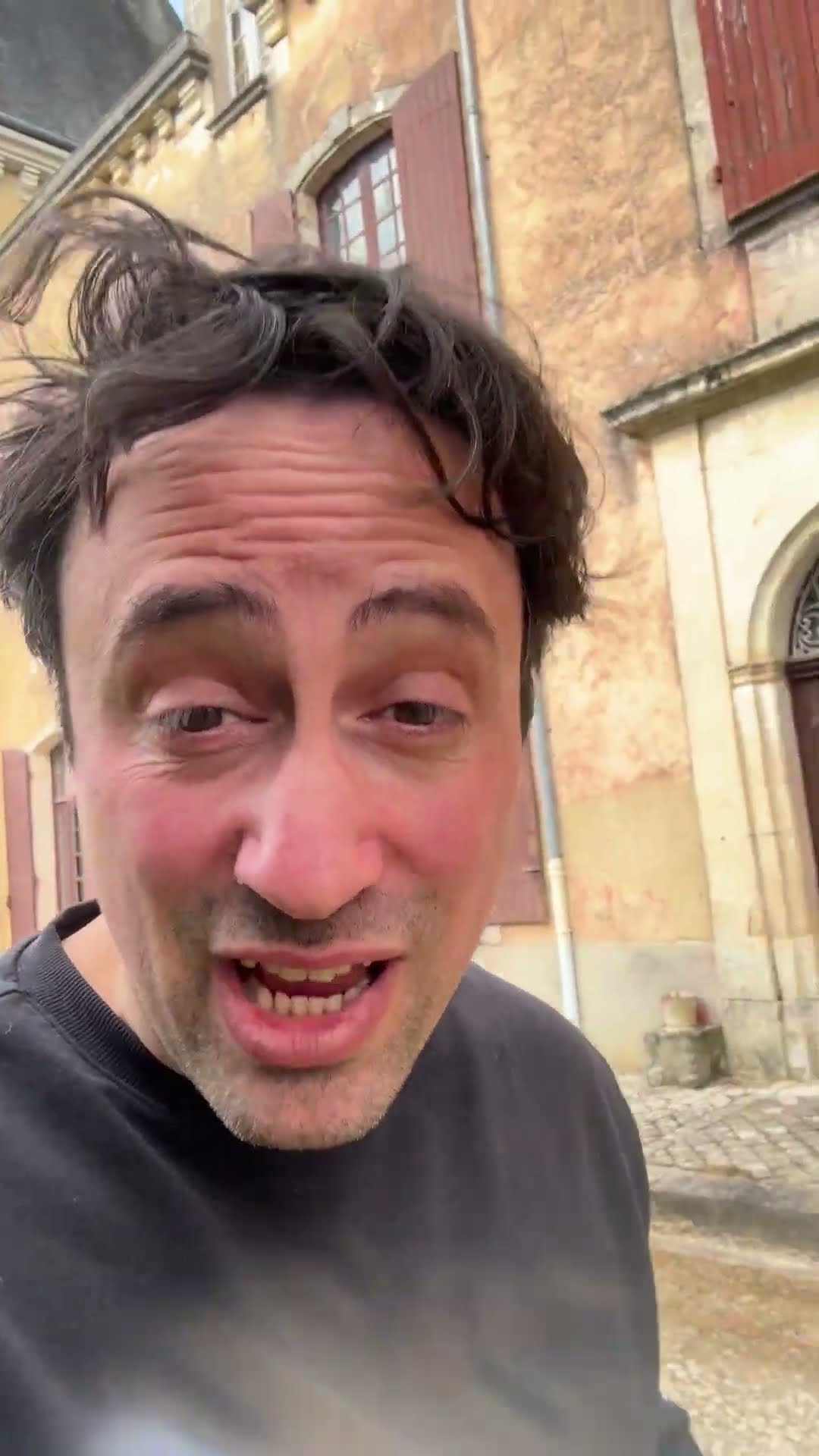
YouTube Shorts video

A Personal Welcome at Château de la Grange

Virginia & Max

A stay in Cognac should never be skipped when travelling through the Charente. This time our visit took us north to Saint-Jean d'Angély, where the family welcomed us personally to Château de la Grange. The Bouron name has been on cognac bottles since 1832, and the family has been at this château since 1867, when Louis Bouron, a Doctor of Medicine, trained from childhood by his father Alexandre, made it the family seat.

The château itself reaches further back still. It was already standing in 1621 when Louis XIII paused here during the siege of Saint-Jean d'Angély. Louis Bouron took over the property in the 19th century and made it the cognac estate it remains today, run by the same family across five generations.

We were poured through the entire range, from the Napoléon to the Sublime, with the kind of generosity and patience that only family producers seem to have. What stayed with us was the consistency of the house style: three-cru assemblages from the estate vineyards, patient ageing, and absolutely no additives. The natural amber colour, the depth and the rancio on the rarest bottlings all come from time alone.

  • Estate: Château de la Grange in Saint-Jean d'Angély, family seat of the Bourons since 1867, and where Louis XIII paused in 1621
  • Ageing: Small-batch Cognacs, patiently matured in oak across the full house range
  • Distinction: Historically the only house licensed to bottle Cognac under the Maxim's de Paris label, with the Maxim's emblem alongside the Bouron coat of arms
  • Style: Three-cru assemblages from four family vineyards (Borderies, Petite Champagne, Fins Bois), natural colour, no additives

Louis Bouron XO Cognac

Matured patiently in oak barrels

Grande Champagne

$ 184 $ 165
incl. duty, tariff, clearance excl. shipping
Time left
Louis Bouron at Château de la Grange

Matured in Oak

Louis Bouron Sublime Cognac

The rarest bottling of the house

40% ABV, 750ml

$ 1,092 $ 983
incl. duty, tariff, clearance excl. shipping
Time left

Louis Bouron Heritage Cognac

From the family demijohn reserve

40% ABV, 750ml

$ 679 $ 510
incl. duty, tariff, clearance excl. shipping
Time left

Château de la Grange & the Family Vineyards

Side view of Château de la Grange in Saint-Jean d'Angély, the family seat of the Bouron family since 1867

Side view of Château de la Grange in Saint-Jean d'Angély, the family seat of the Bouron family since 1867.

Inside the Louis Bouron cellars at Château de la Grange, generations of oak ageing in the family cellars.

Inside the Louis Bouron cellars at Château de la Grange, generations of oak ageing in the family cellars.

Louis Bouron Today

Louis Bouron operates from Château de la Grange, the historic family residence in Saint-Jean d'Angély at the northern edge of the Cognac region. The estate is composed of four vineyards, spread across three of the six Cognac crus: Borderies, Petite Champagne and Fins Bois. Every bottle of Louis Bouron Cognac is produced exclusively from this family vineyard. No outside eaux-de-vie ever enter the cellar.

During our visit we were taken through the full range bottle by bottle, and the family story was shared with us room by room. The tasting confirmed what the labels promised: an uncompromising commitment to traditional ageing, three-cru assemblages and natural production, no sugar, no caramel colouring, no boisé, just time in oak.

The house style aims for a precise balance the family has refined across five generations:

  • Cognacs that are agreeably soft, while remaining light.
  • Cognacs that carry a remarkable bouquet, while staying dry.
  • Cognacs that show the great finesse of a truly balanced, fully mature spirit.

The house produces both Cognac and Pineau des Charentes. The Napoléon, Grande Réserve, Très Vieille Réserve and XO form the core range, with the Heritage and the Sublime sitting above as the two collector's bottlings.

The estate sells heavily direct from the cellar (the tourist season starting in April brings in a remarkable flow of returning customers) and exports into Europe and to Cognac Clubs in the Netherlands, Belgium, Germany and Norway. Sales to the US and Canada have been stepped back over the years, given the heavy administrative burden of those markets for a producer of this scale.

History of Louis Bouron

The Bouron family's involvement in cognac dates to 1832, the year that appears on every label of the house. A generation later, in 1867, Louis Bouron, a Doctor of Medicine, trained from earliest childhood by his father Alexandre in the work of the vine, of wine and of cognac, made Château de la Grange in Saint-Jean d'Angély the family estate. It has remained so ever since.

The château itself is older than the cognac house. In 1621, during the siege of Saint-Jean d'Angély, Louis XIII briefly resided at La Grange while overseeing the sappers mining the ramparts of the town. After a succession of owners across two centuries, Louis Bouron fell in love with the property and made it the family seat it has been ever since.

The estate today is composed of four vineyards, planted across three of the six Cognac crus: Borderies, Petite Champagne and Fins Bois. Only this family vineyard is used for Louis Bouron Cognac. The blending, ageing and bottling all happen at the château, with the next generation always trained in the same way the doctor was trained by his own father.

Across five generations the work has gone in the same direction: master the ancestral art of distillation, ageing, and the blending of eaux-de-vie of different crus, so that the individual characteristics come together into a cognac of exceptional quality. The result is recognisably Louis Bouron, soft yet light, with a remarkable but dry bouquet, and the finesse of a fully mature spirit.

Louis Bouron was historically the only Cognac house licensed to bottle its eaux-de-vie under the prestigious Maxim's de Paris label. Archival bottles from that programme still rest at the château, no longer for sale but kept as a record of the calibre of cognacs the family has always produced.

A bottle of Louis Bouron Très Vieille Réserve held up in the courtyard of Château de la Grange during our visit

A bottle of Louis Bouron Très Vieille Réserve held up in the courtyard of Château de la Grange during our visit.

A hand-numbered bottle of Louis Bouron Grande Réserve, N°13458 B, from the family cellar

A hand-numbered bottle of Louis Bouron Grande Réserve, N°13458 B, from the family cellar.

Louis Bouron XO Cognac 01
  • -10%
Available

Louis Bouron XO Cognac

$ 184 $ 165
incl. duty, tariff, clearance excl. shipping
Time left
Exceptional 90 /100
What is Louis Bouron?

Louis Bouron is a family-owned Cognac house based at Château de la Grange in Saint-Jean d'Angély, in the northern Charente region of France. The Bouron name has been on cognac bottles since 1832, and the family has held Château de la Grange since 1867, when Louis Bouron, a Doctor of Medicine trained by his father Alexandre, established it as the family seat. Five generations have continued the work since, producing a complete range of Cognacs from the Napoléon through to the rare Sublime bottling. The house style is built on three-cru assemblages (Fins Bois, Borderies, Petite Champagne), patient ageing, and a strict refusal to use sugar, caramel colouring or boisé.

Where is Louis Bouron located?

Louis Bouron is based at Château de la Grange in 17400 Saint-Jean d'Angély, in Charente-Maritime, France. The château is a historic property that was already standing in 1621 when Louis XIII briefly resided there during the siege of Saint-Jean d'Angély. The estate is composed of four vineyards totalling 90 hectares, all planted exclusively for the production of Louis Bouron Cognac.

Which crus does Louis Bouron use?

Louis Bouron farms four vineyards across three of the six Cognac crus: Borderies, Petite Champagne and Fins Bois. Only this family vineyard is used for Louis Bouron Cognac; nothing is bought in. Most of the house cuvées are three-cru assemblages drawing on all three terroirs, which is unusual for a single family estate of this size. The XO in particular leans on Petite Champagne for around half of the blend.

What is the Louis Bouron Heritage?

The Heritage is a rare three-cru assemblage, slowly transferred to demijohn once fully matured and bottled at Château de la Grange. The blend draws on all three crus farmed by the family (Fins Bois, Borderies, Petite Champagne), which is exceptionally rare among bottlings of this scarcity, where most comparable Cognacs are single-cru. It carries deep mahogany colour, old rancio, polished walnut, leather and candied citrus.

What is the Louis Bouron Sublime?

The Sublime is the rarest Cognac in the Louis Bouron cellar and the most exclusive expression of the house, drawn in very limited quantities from the family's demijohn reserve. After an extended maturation in oak, the cognac was transferred to glass demijohn, where the glass stops any further wood influence and holds the aromatic character steady.

What is the history of Louis Bouron?

The Bouron name has appeared on cognac bottles since 1832. In 1867, Louis Bouron, a Doctor of Medicine, trained from earliest childhood by his father Alexandre, established Château de la Grange in Saint-Jean d'Angély as the family seat, and it has remained so ever since across five generations. Historically, Louis Bouron was the only Cognac house licensed to bottle its eaux-de-vie under the prestigious Maxim's de Paris restaurant label, with the Maxim's emblem displayed alongside the Bouron family coat of arms. Archival bottles from that programme still rest at the château.

What is Hors d'Age Cognac?

Hors d'Age is a designation used for Cognacs matured beyond the XO category. The term translates literally as 'beyond age'. The Louis Bouron Très Vieille Réserve falls in this category, as do the Heritage and Sublime bottlings.

What is Pineau des Charentes?

Pineau des Charentes is a fortified aperitif wine produced in the Cognac region of France, made by blending fresh grape juice with Cognac eau-de-vie to stop fermentation and preserve the natural fruit sweetness. The blend is then aged in oak barrels for a minimum of 18 months for white Pineau and 12 months for rosé. Louis Bouron produces Pineau des Charentes alongside its Cognac range, including a Vieux Pineau Louis Bouron known for the same long-ageing philosophy that defines the family's Cognacs.

The wrought-iron and oak doors at Château de la Grange, opening onto the estate grounds

The wrought-iron and oak doors at Château de la Grange, opening onto the estate grounds.

The study at Château de la Grange with its 17th-century tapestry, where five generations of Bouron family Cognacs have been signed off.

The study at Château de la Grange with its 17th-century tapestry, where five generations of Bouron family Cognacs have been signed off.

A weathered stone statue in the gardens of Château de la Grange

A weathered stone statue in the gardens of Château de la Grange.

Louis Bouron Grande Réserve, close-up of the hand-numbered label from the family cellar

Louis Bouron Grande Réserve, close-up of the hand-numbered label from the family cellar.

The wooden Cognac and Pineau sign at the entrance to Château de la Grange, both produced on the estate

The wooden Cognac and Pineau sign at the entrance to Château de la Grange, both produced on the estate.

The Louis Bouron range is built around the three crus farmed by the family at Château de la Grange: Borderies, Petite Champagne and Fins Bois. Across four estate vineyards and 90 hectares, every bottle is produced exclusively from family-grown grapes. Most bottlings are three-cru assemblages, with the proportion of each cru shifting subtly between the cuvées to give each expression its own profile.

The Louis Bouron Range

The Louis Bouron range is unusually broad for a single family estate, all built from the three family crus, all bottled at 40% ABV, all numbered by hand.

  • Napoléon: Three-cru assemblage, patiently matured in oak. Round and approachable, with candied orange, dried apricot and a discreet Borderies floral lift.
  • Grande Réserve: A textbook XO. Candied fruit on the nose (quince, peach, apricot paste), restrained oak, a complete and well-behaved palate that stays in its lane. Mouthwatering, warming, very easy to drink.
  • Très Vieille Réserve: The assertive expression of the range. Deeper colour, toasty and roasty notes, leather, fine tobacco, walnut and dark chocolate. A heavier oak profile than the rest of the lineup, intentionally so, making it the most extroverted Cognac of the house.
  • XO: Around half Petite Champagne, the rest Fins Bois and Borderies. Strikingly pale, fine and delicate, with mirabelle plum, greengage in syrup, a touch of mushroom rancio and a long, soft-spoken finish. The refined member of the core range.
  • Heritage: A rare three-cru assemblage drawn from the family demijohn reserve and bottled at Château de la Grange. Mahogany colour, old rancio, polished walnut, leather, candied citrus.
  • Sublime: The rarest expression of the house, drawn in very limited quantities from the family demijohn reserve.

Across the lineup, the house refuses the use of sugar, caramel colouring or boisé. The natural amber of each cuvée comes entirely from oak, and the depth of rancio on the rarest bottlings comes entirely from time.

Pineau des Charentes & the Family Tradition

Alongside the Cognac range, the Bouron family produces Pineau des Charentes from the same vineyards. The estate has a particular reputation for old Pineau, in the same family tradition of long ageing and natural production that defines the Cognac range.

Visiting the cellar in person is something we strongly recommend if you happen to be travelling through the Charente-Maritime. The tourist season starts in April, the Château is open and beautiful, and the family welcome is genuine.

How Louis Bouron Compares

Three cuvées, three sets of head-to-head comparisons against well-known references on Cognac Expert. The same multi-cru blending discipline and natural production runs through all three.

Louis Bouron Grande Réserve

  • vs Tiffon XO: a benchmark XO, much like the Louis Bouron Grande Réserve. The Bouron is a shade darker.
  • vs André Petit XO: a little drier and more demanding than the André Petit, but also maybe more interesting.

Louis Bouron Très Vieille Réserve

  • vs Martinaud XO Héritage: the Louis Bouron Très Vieille Réserve has more oomph, more vigour, and is more masculine in profile.
  • vs Normandin Mercier Petite Champagne Rare: the Louis Bouron Très Vieille Réserve is slightly more rustic and masculine, but also at a much different price tag.

Louis Bouron XO

  • vs Godet XO Terre: the same refinement and delicate fruit, with a soft-touch oak profile, but without the fancy bottle.
  • vs Ragnaud Sabourin XXO: the extra dose of Folle Blanche in the Ragnaud is undeniable, but both Cognacs show a more delicate side of maturity.
The approach to Château de la Grange, with the family Cognac and Pineau sign visible by the lane

The approach to Château de la Grange, with the family Cognac and Pineau sign visible by the lane.

Virginia from Cognac Expert with a bottle of Louis Bouron Très Vieille Réserve at Château de la Grange.

Maxim's de Paris: A Historic Distinction

One of the most striking distinctions in the Louis Bouron archive is that the house was historically the only Cognac producer licensed to bottle its eaux-de-vie under the prestigious Maxim's de Paris label. The legendary Belle Époque restaurant on Rue Royale selected a special range of Louis Bouron Cognacs to carry its name, with the Maxim's emblem displayed alongside the Bouron family coat of arms on every bottle. It is a recognition that has never been extended to any other Cognac house.

Bottles from that programme still rest at Château de la Grange. They are no longer for sale, but one was brought out for us during our visit, a quiet archival reminder of the calibre of cognacs the family has produced for almost two centuries. Few independent Cognac houses can point to a comparable historical credential.

In Closing

Louis Bouron is a house with deep historical roots, a Château at the heart of a five-generation family estate, and a range that combines terroir breadth, patient ageing and genuine rarity. Our visit to Saint-Jean d'Angély confirmed what the bottlings themselves make clear: this is a small producer doing things their own way, with a coherent style across two centuries and a portfolio that, across the range, sits at a level of value the bigger houses cannot match. Louis Bouron offers something for every palate, always with authenticity and finesse. Cheers!

An archive atlas from Château de la Grange, kept on the estate alongside the family cellar records, a quiet reminder of the Maxim's de Paris era.

Virginia from Cognac Expert inspecting the Louis Bouron Sublime bottle by the window light at Château de la Grange

Virginia from Cognac Expert inspecting the Louis Bouron Sublime bottle by the window light.

The iron gate and stone pillar at the entrance to Château de la Grange, the family seat of Louis Bouron

The iron gate and stone pillar at the entrance to Château de la Grange, the family seat of Louis Bouron.

Max from Cognac Expert with the Louis Bouron XO Cognac at Château de la Grange

Max from Cognac Expert with the Louis Bouron XO Cognac at Château de la Grange.

A bottle of Louis Bouron Très Vieille Réserve held up in front of the Renaissance stone entrance of Château de la Grange.

A bottle of Louis Bouron Très Vieille Réserve held up in front of the Renaissance stone entrance of Château de la Grange.

A historic Louis Bouron promotional photograph still hanging at Château de la Grange, château, vineyards and the full range on a single frame.

A historic Louis Bouron promotional photograph still hanging at Château de la Grange, château, vineyards and the full range on a single frame.

Looking Ahead

Across nearly two centuries the Louis Bouron approach has not changed. The family still farms the same three crus, still distils at Château de la Grange, still ages in the same oak, still refuses additives. The next generation is already in place, and the cellars hold reserves of eaux-de-vie that will become the Hors d'Âge and Heritage bottlings of decades to come.

A Living Cognac Archive

What makes Louis Bouron unusual today is the combination of three things almost no producer can offer together: a continuous family lineage since 1832, a working demijohn reserve, and a complete three-cru estate. Each bottling carries that combination. The Napoléon reflects the same philosophy as the Sublime.

For collectors and enthusiasts, the appeal is straightforward: every Louis Bouron Cognac is a snapshot of the same house, the same family, the same vineyards, sampled at a different point in time.

Product added to wishlist
Product added to compare.
You have successfully followed this brand